Skip to content

Struggling to assemble composite decking samples kits that actually help your buyers make a firm procurement decision? When WPC dealers or building-materials contractors request physical pieces, sending a random assortment often leads to confusion, delayed internal approvals, and wasted international shipping costs. The solution is tailoring your presentation to the buyer's specific evaluation stage.
To prepare effective composite decking samples kits, suppliers must align the contents with the buyer's evaluation goals. Choose between board-only kits for color comparison and comprehensive kits with accessories for system evaluation. Always prioritize clear identification labels—including model, profile, and color—over purely decorative packaging to streamline B2B procurement.
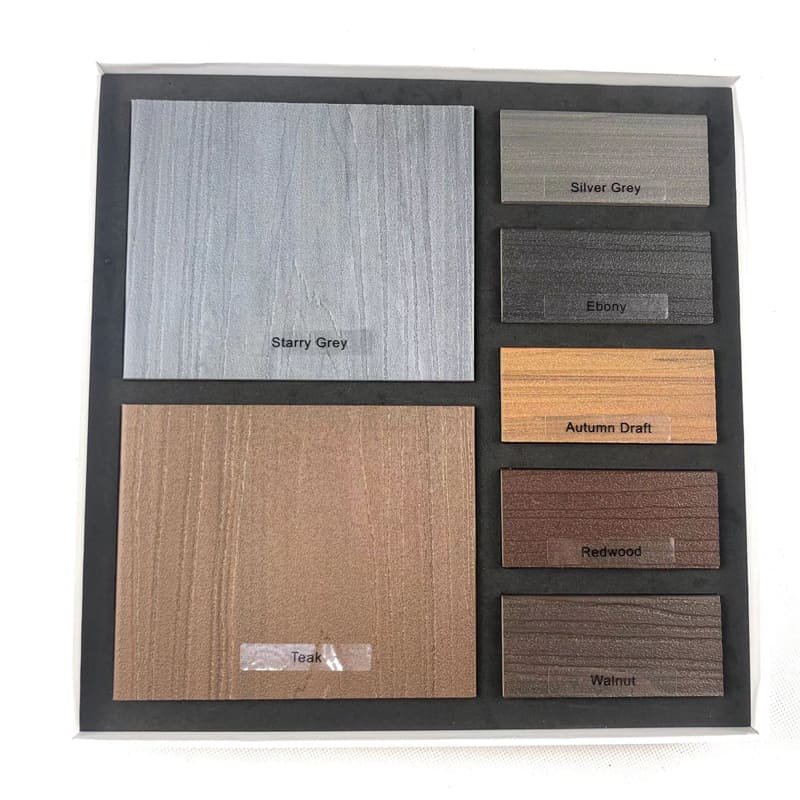
In my experience handling wood-plastic composite (WPC) inquiries, a well-planned sample box does more than just look professional. It bridges the gap between digital catalogs and physical manufacturing reality. Let’s break down how to structure these packages properly.
What Are the Main Types of Composite Decking Samples Kits?
Not knowing which type of WPC sample to send can unnecessarily inflate your freight bill. If an importer only wants to check surface colors, shipping a massive box of hidden fasteners and heavy fascias drains your budget. We need to categorize the kits.
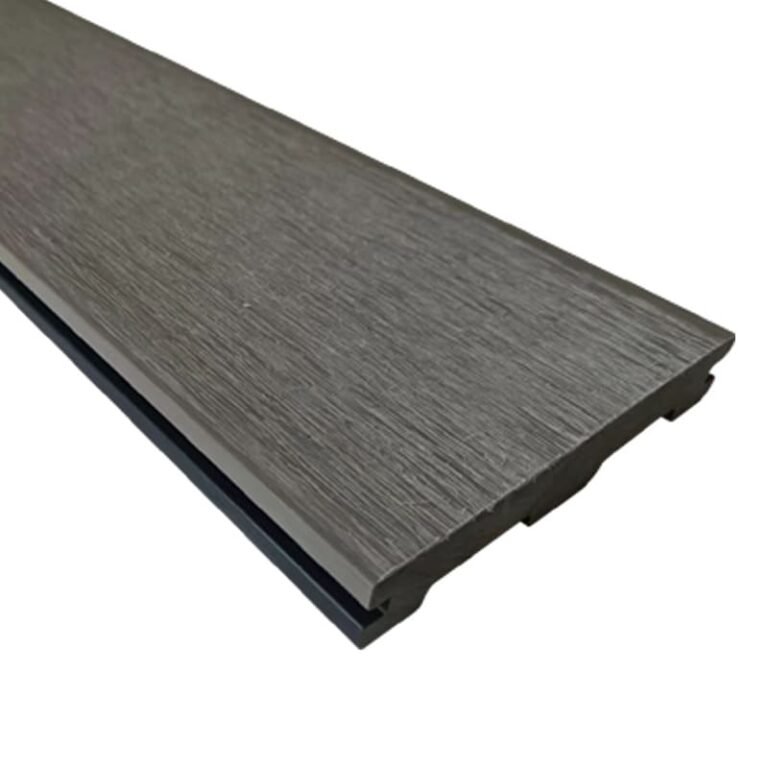
There are two primary categories of composite decking samples kits: board-only sets and comprehensive accessory-inclusive sets. Board-only kits are best for aesthetic range and color comparison, while accessory-inclusive kits help buyers understand system components, fastener compatibility, and overall structural profiles.
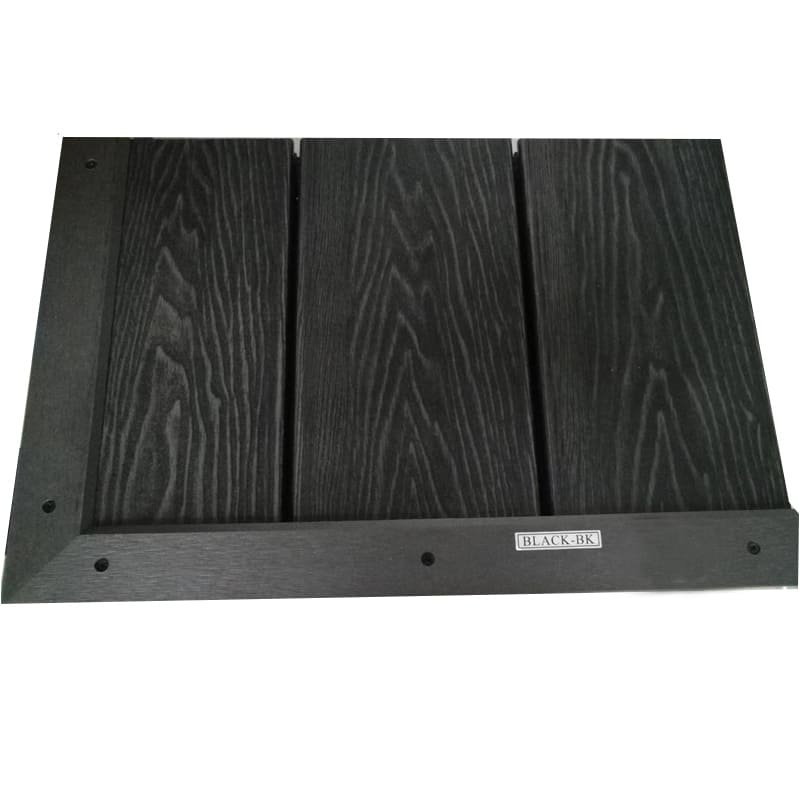
When I qualify new dealers adding WPC to their building materials catalog, I always ask what exactly they need to evaluate. This single question determines the kit type and directly impacts their supplier selection process.
Board-Only Kits
This format is the standard for existing WPC importers who are looking to replace a supplier, add a backup factory, or expand an existing product range. They already know how clips and joists work; they just need to see our co-extruded surface treatments.
- Core Purpose: Color, texture, and profile comparison.
- Typical Contents: Cut-offs of different colors within a specific series (e.g., traditional vs. capped composite).
- Commercial Advantage: Lighter weight, much cheaper express shipping, and highly focused on aesthetics and inventory range expansion.
Boards-with-Accessories Kits
For a building-materials dealer newly adding composite decking to their retail or wholesale channels, a board-only box simply is not enough. They face high initial procurement risks and need to understand the complete installation ecosystem before quoting downstream contractors.
- Core Purpose: Explaining system components and accessory purchasing.
- Typical Contents: Decking boards, starter clips, hidden T-clips, color-matched screws, and edge fascia boards.
- Commercial Advantage: Shows exactly how the profile grooves interact with the specific fasteners, reducing accessory-compatibility risks.[^1]
The Limits of Physical Samples
It is critical to note that including accessories in composite decking samples kits does not certify installation suitability for local building codes.[^2] A sample merely demonstrates physical dimensions and the expected mechanical assembly method. B2B buyers must still verify these physical components against their local compliance requirements, structural plans, and official technical specifications. Treat the sample as a visual and dimensional baseline, not a guarantee of universal market approval.
How Should You Size Pieces for Composite Decking Samples Kits?
Sending uniform ten-centimeter blocks seems highly efficient for the factory, but it often fails the procurement manager. A tiny square cannot accurately display a repeating wood-grain pattern, leaving the buyer guessing about the final installed look. We need a smarter cutting strategy.
Give different samples different jobs within the box. Include one or two longer pieces (20–30 cm) to clearly demonstrate 3D wood-grain texture and surface finish.[^3] Use smaller cut-offs (5–10 cm) strictly for comparing the available color palette and core profiles within the same series.

Determining the exact quantity and length of pieces before sizing the outer box is a vital step in manufacturing quality control and sales presentation. If you select the standard courier box first, you will either cram too many heavy profiles inside or pay to ship empty space.[^4]
Balancing Presentation and Freight Costs
Shipping physical wood-plastic composite material internationally via air express is expensive. A dense, heavy package can cost hundreds of dollars. Here is how I usually recommend structuring the dimensions inside composite decking samples kits:
| Sample Role | Recommended Length | Primary Evaluation Function |
|---|---|---|
| The "Hero" Board | 200 mm – 300 mm | Displays full wood-grain embossing, 3D texture, and anti-slip coating. |
| Color Swatches | 50 mm – 100 mm | Shows the spectrum of available colors (e.g., Teak, Ipe, Charcoal). |
| Profile Cut-offs | 50 mm – 100 mm | Highlights the structural difference between solid, round-hole, and square-hole boards. |
By using just one "hero" board, the buyer gets the tactile experience of the full texture. The smaller pieces provide the necessary comparison options without multiplying the shipping weight to an unsustainable level.
Managing Sample-to-Bulk Consistency Expectations
When reviewing these cut-offs, buyers must understand that samples represent a target appearance. Because wood-plastic composite decking contains natural wood fibers, slight batch-to-batch color variations will naturally occur during mass production.[^5]
A sample piece shows the profile geometry, relative weight, and general surface finish, but it does not guarantee absolute uniformity across a full 40-foot container order. Always retain batch evidence of the samples sent. During the final order phase, clearly define sample-to-bulk tolerances on the production confirmation sheet to prevent future quality claims.
Why is Clear Identification Crucial for Composite Decking Samples Kits?
Have you ever received a beautiful sample box, only to find the individual pieces have no item numbers? When a category manager wants to order "the light brown one," but you manufacture five light brown profiles, the resulting confusion can derail the entire order.
Prioritize product identification over decorative packaging. Every item in composite decking samples kits must have a secure label stating the specific model number, profile type, color name, and material series. This ensures accurate communication when transitioning from sample approval to a commercial quotation.[^6]
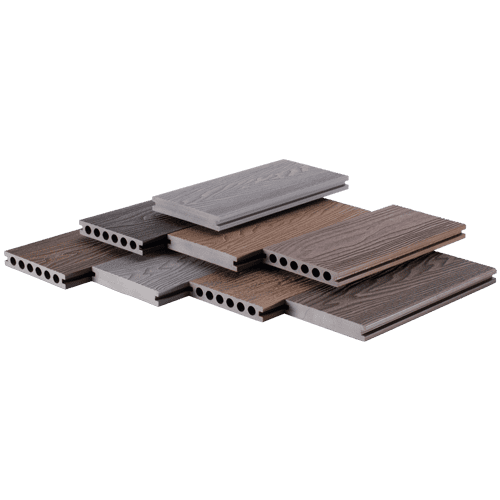
In the B2B WPC industry, clear and verifiable data heavily outweighs a fancy ribbon or an expensive presentation box. While custom branded packaging and glossy information cards look great, they are secondary to hard procurement facts.
Essential Labeling Data
When an importer or wholesale distributor presents your samples to their boss or internal buying committee, they need answers immediately. A poorly labeled kit signals a disorganized factory. I always ensure the labels securely attached to the back of the samples include:
- Factory Model/Item Number: (e.g., VJ-14025H)
- Profile Architecture: (e.g., Square Hollow, Solid Co-extruded)
- Color Designation: (e.g., Walnut, Silver Grey)
- Compatible Accessories: (e.g., Requires 6mm gap stainless steel T-clip)
Matching Certifications to the Task
Avoid stuffing composite decking samples kits with every technical document your factory has ever acquired. Instead, match the supporting information to the buyer's actual evaluation task. If they are comparing capping thickness, include a brief cross-section dimension diagram.
If the buyer asks about compliance, treat certifications as documents buyers should independently verify rather than marketing tools. Provide specific, model-related CE documents, Intertek reports, or FSC supply-chain claims digitally.[^7] Physical samples show immediate details; they do not prove a 10-year warranty or ISO 9001 factory management standards.[^8] Buyers should rely on verified paperwork and qualified professional evaluation for application-specific decisions.
How Should You Handle Costs for Composite Decking Samples Kits?
Dealers often expect free samples, but customized B2B kits and international courier fees add up incredibly fast. Absorbing all these expenses without strictly qualifying the lead drains your margins and invites unqualified window-shoppers. Let's look at managing sample costs realistically.
Separate kit preparation from guaranteed supply promises. The cost of composite decking samples kits depends on board dimensions, customized branding, included accessories, and international freight. Treat sample pricing and freight charges as individually negotiated items based on the buyer's credible future demand.
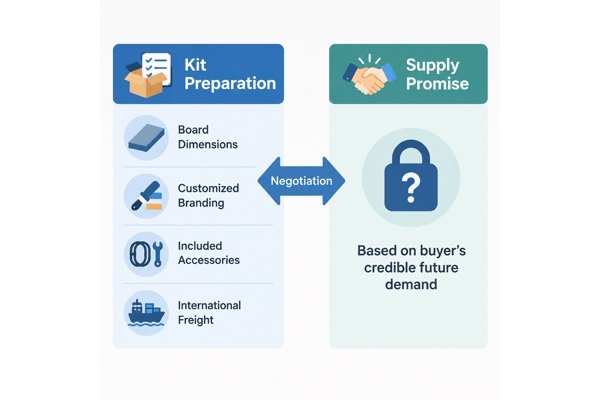
Historical industry claims of a standard $5–$15 board-only kit or an $8–$25 accessory-inclusive kit are just that—historical benchmarks. In reality, actual costs fluctuate constantly based on current logistics rates, material processing, and customized preparation setups.
The Variables Behind Kit Costs
When quoting the preparation of a sample box, I must assess several variable factors:
- Sample Contents: Are we cutting and packing 5 distinct pieces or a comprehensive 20-piece library?
- Packaging Requirements: Do you need neutral packaging, or are we developing custom-branded display boxes for your downstream retail clients?
- Shipping Terms: Express international courier fees usually dwarf the cost of the plastic and wood fibers themselves.[^9] Delivery at Place (DAP) via air express is standard for samples, which differs entirely from FOB sea freight pricing.[^10]
Implementing Fair Charging Policies
There is no universal "free sample" rule that applies to every inquiry. While routine verifications or standard cut-offs might occasionally be factory-funded for highly qualified, existing WPC dealers, we generally negotiate sample charges and freight individually.
Typically, the buyer covers the express freight charges upfront. In many cases, these initial sample fees and shipping costs can be credited back once a buyer formally places an order and pays a first production deposit (usually a 30% deposit, with the 70% balance against the B/L copy[^11]). This mutual investment ensures that the buyer is genuinely interested in evaluating margins and planning a real procurement cycle, rather than just collecting free materials.
Frequently Asked Questions
What is the primary purpose of a WPC sample kit?
The main purpose of composite decking samples kits is to allow B2B buyers to physically evaluate color, texture, profile dimensions, and accessory compatibility before committing to a bulk manufacturing order or changing their current supplier.
Do WPC samples guarantee final installation performance?
No. Physical samples only demonstrate appearance, relative weight, and profile structure. Validating long-term durability, structural safety, and compliance with local building codes requires verifying official technical data sheets and consulting qualified installation professionals.
Can I get a customized sample box for my retail showroom?
Yes, existing building-materials dealers can request customized sample displays. However, custom branding, specific model inclusion, and showroom display boards involve separate development fees and longer lead times, which must be negotiated individually.
How long does it take to prepare and receive a sample kit?
Preparation usually takes just a few days if you select existing models and colors. However, international express shipping times vary by destination. Once shipped, it typically takes between 5 to 10 days to reach most North American or European markets.[^12]
Conclusion
Preparing effective composite decking samples kits requires strategic alignment between the factory and the buyer. By designing the kit around the buyer's actual evaluation goals—whether sending a lightweight board-only box for color comparison or a comprehensive accessory kit for system verification—you eliminate guesswork and streamline the B2B procurement process. Always prioritize clear identification labels, utilize varied board lengths to balance presentation with freight costs, and treat sample charges as a mutually negotiated investment. If you are actively evaluating WPC suppliers or expanding your building materials range, contact Veejoy Outdoor with your intended use, required models, and specific approval needs so we can prepare the exact evaluation tools your business requires.
[^1]: "Best Fasteners For Trex Composite Decking", https://www.trex.com/deck-ideas/best-fasteners-for-trex-composite-decking/. Research on composite decking connections identifies board geometry and fastening properties as relevant to connection performance; inspection of sample components demonstrates fit but does not replace mechanical testing. Evidence role: mechanism; source type: paper. Supports: Fastener geometry and connection properties are relevant to composite decking system compatibility.. Scope note: Connection research provides technical context, not direct evidence that accessory-inclusive kits reduce procurement errors.
[^2]: "Code Compliance Research Report CCRR-0128", https://assets.timbertech.com/content/dam/wp-content/Building-Code-CCRR-0128-TimberTech-Decking-Planks.pdf. Composite decking code provisions and acceptance criteria address tested performance and installation requirements; a physical sample alone does not establish compliance for a particular installation. Evidence role: general_support; source type: institution. Supports: Code acceptance depends on applicable standards, evaluated performance, and installation conditions rather than possession of samples.. Scope note: Applicable requirements depend on the jurisdiction, adopted code edition, and intended use.
[^3]: "Perceptual dimensions of wood materials - PMC - NIH", https://pmc.ncbi.nlm.nih.gov/articles/PMC11129719/. Research on visual texture assessment provides context for displaying sufficient surface area to reveal pattern characteristics; it does not establish 20–30 cm as a universally adequate decking sample length. Evidence role: general_support; source type: paper. Supports: The visible area of a material sample affects how much texture and pattern information can be assessed.. Scope note: Adequate length depends on the particular embossing pattern, repeat interval, and evaluation task.
[^4]: "Postal Transport Guide", https://www.upu.int/UPU/media/upu/files/postalSolutions/programmesAndServices/postalSupplyChain/Transport/publications/guidePostalTransportEn.pdf. Air transport charging methods can use volumetric weight when it exceeds actual weight, so oversized packaging may increase chargeable weight even without additional contents. Evidence role: mechanism; source type: institution. Supports: Package dimensions as well as actual mass can affect air transport charges.. Scope note: The cost effect depends on the service's dimensional-weight formula and tariff; inefficient packing does not invariably increase charges.
[^5]: "Improving the color stability of wood-plastic composites ...", https://research.fs.usda.gov/treesearch/30662. Studies of wood–plastic composites associate surface color with wood constituents and processing conditions, supporting the possibility of production-related appearance variation rather than attributing it exclusively to natural fibers. Evidence role: mechanism; source type: paper. Supports: Wood constituents and processing variables can influence WPC surface color.. Scope note: Results for uncapped formulations may not transfer directly to pigmented or capped decking, and they do not establish an acceptable batch tolerance.
[^6]: "Guidance on the requirements for Documented Information ...", https://www.iso.org/iso/documented_information.pdf. Product identification and traceability frameworks support linking physical items to their specifications and transaction records; consistent labeling can facilitate this linkage but does not guarantee error-free quotations. Evidence role: general_support; source type: institution. Supports: Consistent product identifiers support traceability and the association of products with commercial records.. Scope note: These frameworks do not prescribe the article's exact label fields or quantify their effect on WPC procurement.
[^7]: "Group Chain of Custody (CoC) FSC Certification Manual", https://cfwc.mgcafe.uky.edu/sites/cfwc.ca.uky.edu/files/cfwc_coc_group_certification_manual_revised_2_16_2018_0.pdf. European construction-product guidance links applicable CE documentation to declared product performance, whereas FSC chain-of-custody requirements govern forest-material claims through the supply chain; these forms of evidence are not interchangeable. Evidence role: definition; source type: institution. Supports: CE-related product documentation and FSC chain-of-custody claims serve different purposes and must be checked within their respective scopes.. Scope note: CE applicability depends on the product and regulatory route, and FSC claims do not establish structural or installation performance.
[^8]: "ISO 9001:2015 - Quality management systems", https://www.iso.org/standard/62085.html. ISO 9001 specifies quality-management-system requirements rather than certifying individual product performance; a decking sample therefore cannot establish the manufacturer's certification status. Evidence role: definition; source type: institution. Supports: ISO 9001 concerns an organization's quality-management system rather than certification of an individual product sample.. Scope note: This supports the ISO 9001 distinction only; warranty duration and coverage require separate contractual documentation.
[^9]: "Universal Postal Convention", https://www.upu.int/UPU/media/upu/files/aboutUpu/acts/03-actsConventionAndFinalProtocol/conventionAndFinalProtocolAdoptedAtAbidjanEn.pdf. Parcel-cost and composite-production analyses provide context for comparing transport charges with material value, but do not establish that international express freight usually exceeds the raw-material cost of these sample kits. Evidence role: general_support; source type: research. Supports: Transport tariffs and WPC material costs provide inputs for comparing freight with the material value of a small sample shipment.. Scope note: The comparison requires contemporaneous rates, shipment dimensions and weight, destination, and the kit's material composition.
[^10]: "Know Your Incoterms", https://www.trade.gov/know-your-incoterms. Incoterms distinguish DAP, which can be used with any transport mode, from FOB, which applies to sea and inland-waterway transport; the terms allocate delivery responsibilities, costs, and risks rather than prescribing sample-shipment practice. Evidence role: definition; source type: institution. Supports: DAP can be used across transport modes, whereas FOB is intended for sea and inland-waterway transport.. Scope note: These definitions do not establish that DAP is standard for decking samples or that either term constitutes a freight-pricing method.
[^11]: "Methods of Payment", https://www.trade.gov/methods-payment. International trade guidance describes multiple payment methods with differing risk allocations; a 30% deposit and 70% balance against a bill-of-lading copy is a contractual arrangement, not a universal payment standard. Evidence role: general_support; source type: government. Supports: International sales use negotiated payment arrangements that allocate payment and delivery risk between parties.. Scope note: General trade guidance does not establish the prevalence of this particular split in the WPC industry.
[^12]: "Postal Transport Guide", https://www.upu.int/UPU/media/upu/files/postalSolutions/programmesAndServices/postalSupplyChain/Transport/publications/guidePostalTransportEn.pdf. International delivery-performance and customs-release studies identify transport and clearance as contributors to cross-border transit time; they do not establish a general 5–10-day arrival window for decking samples. Evidence role: general_support; source type: institution. Supports: Cross-border delivery time depends on transport performance, customs clearance, and the shipment route.. Scope note: The stated range requires route- and service-specific shipment evidence, including whether days are calendar or business days.